
The story behind the list
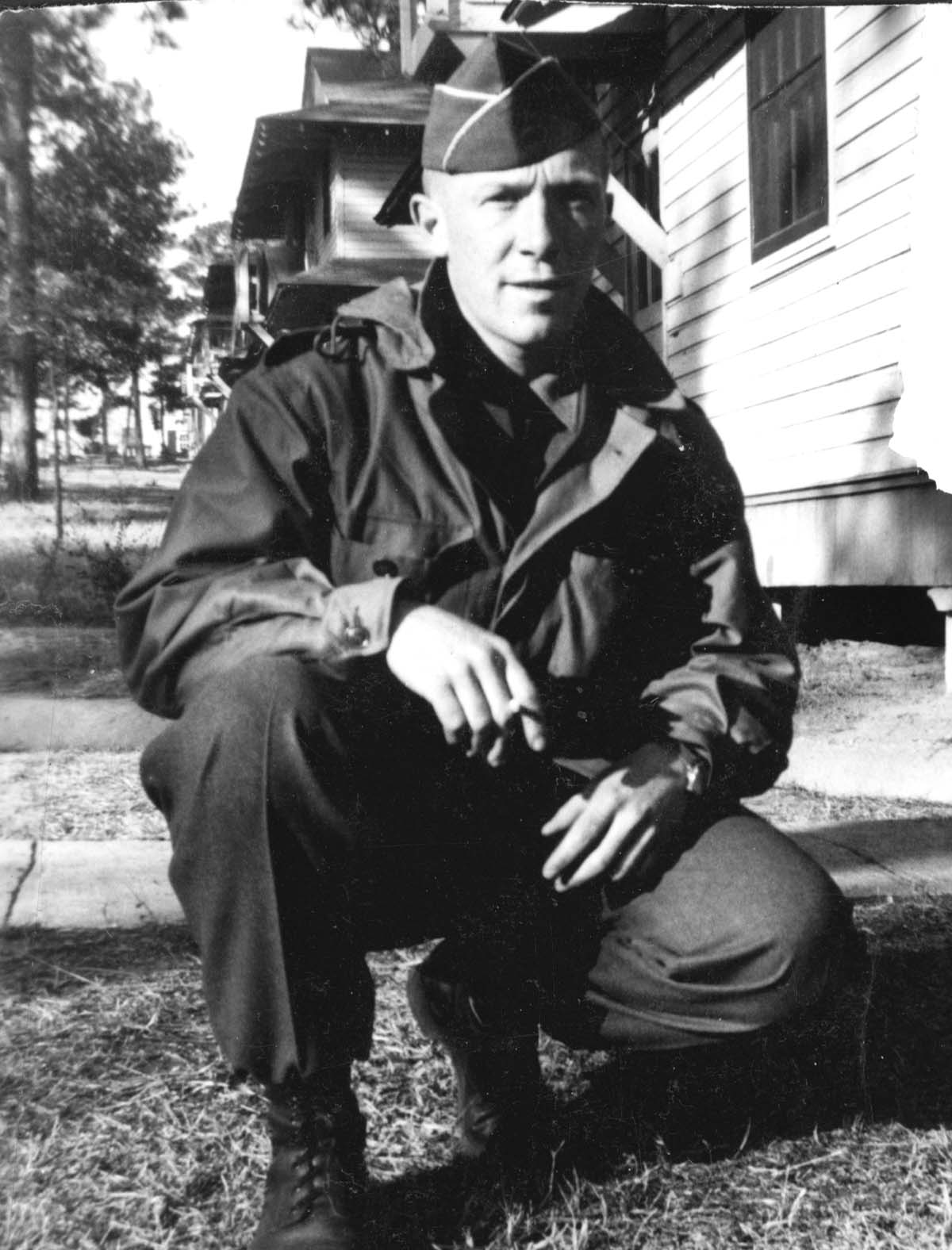
Joseph Bernard Bartscherer spent his working life in masonry and construction around New York. His wife, Rita, kept the record of it: two sheets, hand-lettered in ink, naming the jobs he worked on as they came and went.
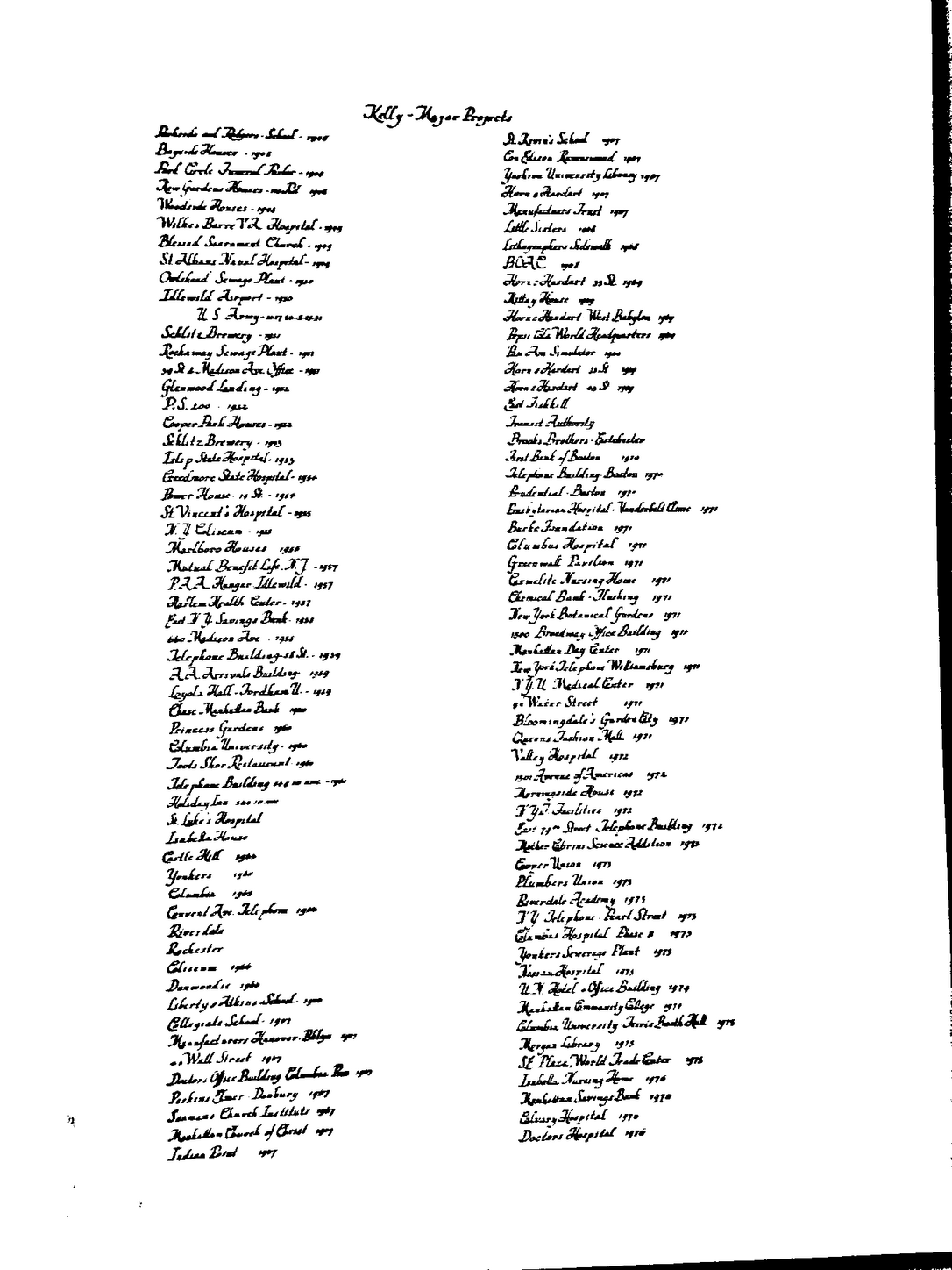
Together the sheets list 205 projects between 1948 and 1991 — housing, hospitals, terminals, telephone buildings, a brewery, a memorial, a world trade center. This site is the attempt to find those places again, and to understand what part the Kelly companies, and Joseph, actually played in them.
The two sheets
Two pages, written by hand and read line by line. Together they record 205 projects from 1948 to 1991, beginning with post-war housing and ending at Wyckoff Heights Medical Center.
Page one — Rita Bartscherer’s handwritten record of Joseph’s projects
Bartscherer family archive
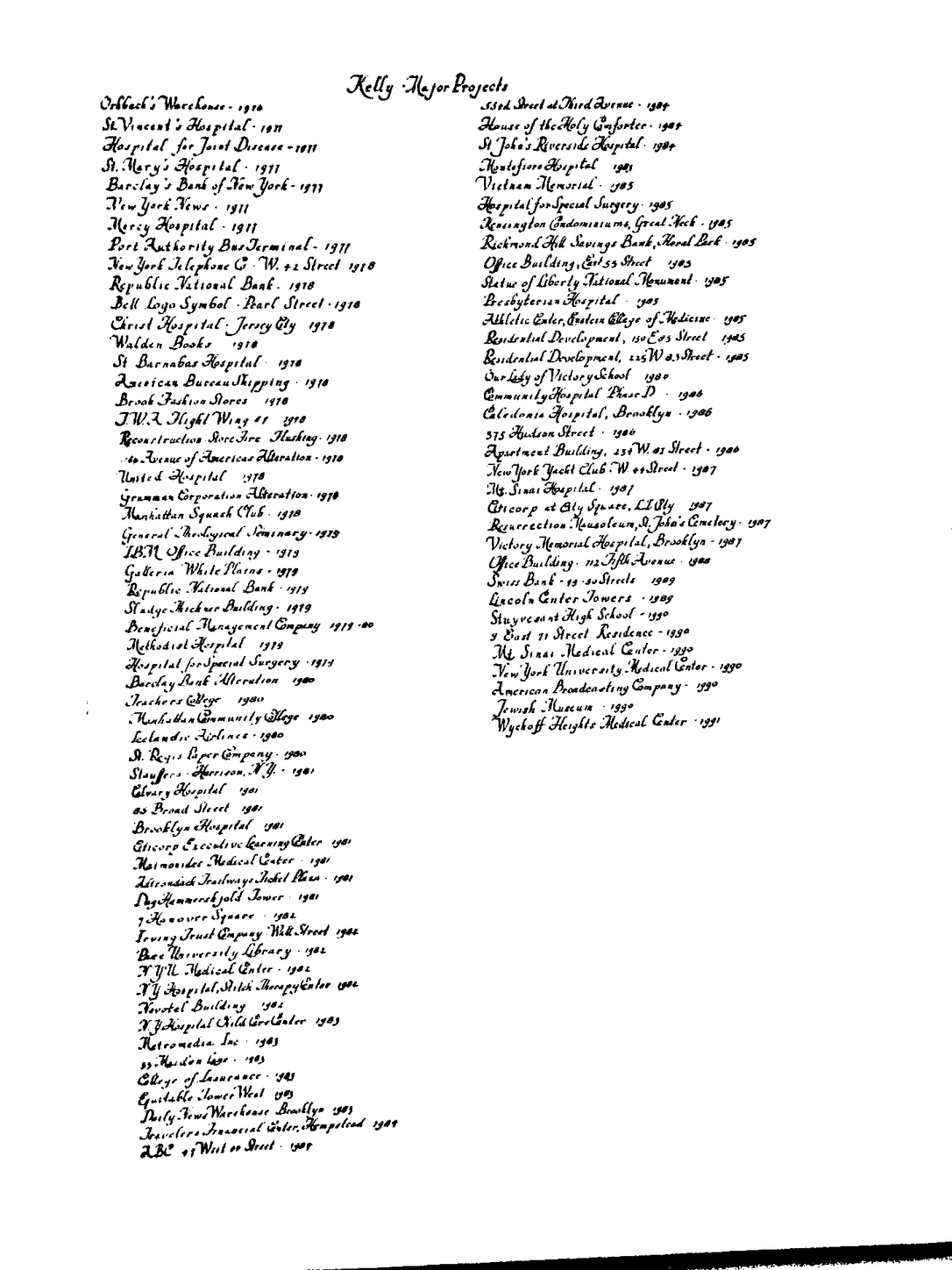
Page two — Rita Bartscherer’s handwritten record of Joseph’s projects
Bartscherer family archive
A working life in brick and masonry
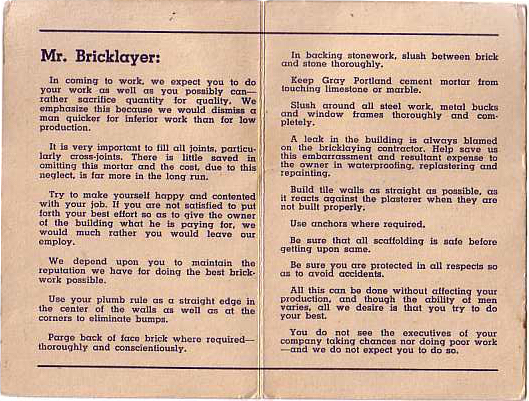
Family recollection holds that Joseph began as a bricklayer for John B. Kelly, Inc., the Philadelphia firm at 1720 Cherry Street whose instruction card survives among his papers, and that his career continued through the New York company later known as Kelly Masonry Corporation.
The public record complicates that memory rather than confirming it. Kelly Masonry Corporation appears as a New York business corporation with a filing date of September 3, 1970 — earlier than the family’s sense that the New York wing separated later in that decade. A 1974 federal contractor listing places the company at 1615 Northern Boulevard in Manhasset; by 2018 its letterhead gives 366 Sagamore Avenue in Mineola, signed by a president writing on behalf of twenty-five to a hundred employees. It is still listed as an operating contractor today.
Both accounts are kept. The family story may describe an ownership or operating separation rather than an incorporation; a directory entry independently places another Bartscherer working as a laborer for Kelly Masonry in 1991–92, at the far end of Joseph’s listed career. Where a contract, published credit or trade report names Kelly, the archive says documented. Where only family testimony carries the connection, it says so.

Kelly for Brickwork
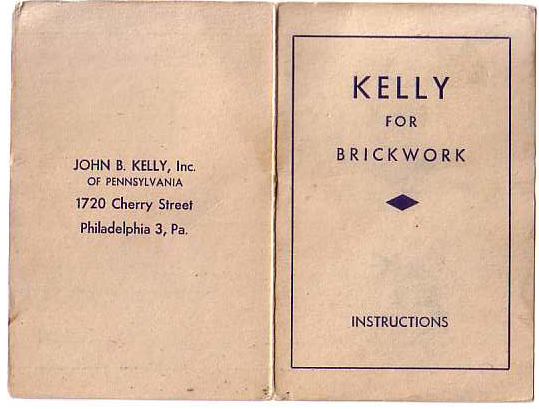
The instruction card issued to bricklayers by John B. Kelly, Inc., 1720 Cherry Street, Philadelphia.
Bartscherer family archive
Three questions for every project
Identify the place
What building or site does Rita’s entry refer to? 146 of 205 entries now have a place identified with confidence.
Establish Kelly’s role
Is Kelly’s involvement supported beyond the family record? 4 entries are documented and 4 corroborated so far.
Document the masonry
What work can actually be tied to Kelly or to Joseph? Where the package can be described, it is described, and labelled documented, likely or unresolved.
A strong answer to one question is never allowed to stand in for the others. Probable identifications stay labelled as probable, uncertainty stays visible on the page, and nothing is upgraded from a likelihood to a fact for the sake of a tidier layout.
59 entries have identities still unresolved
Some lines name a building that no longer exists under that name. Some name a client instead of a place. Some are a few words of shorthand that still cannot be tied to any particular building or site — a job only the man who worked it could have named. Those entries stay exactly as Rita wrote them, with nothing published in their place. If you recognise one, that is precisely the knowledge this archive is missing.
Browse the open entries →